

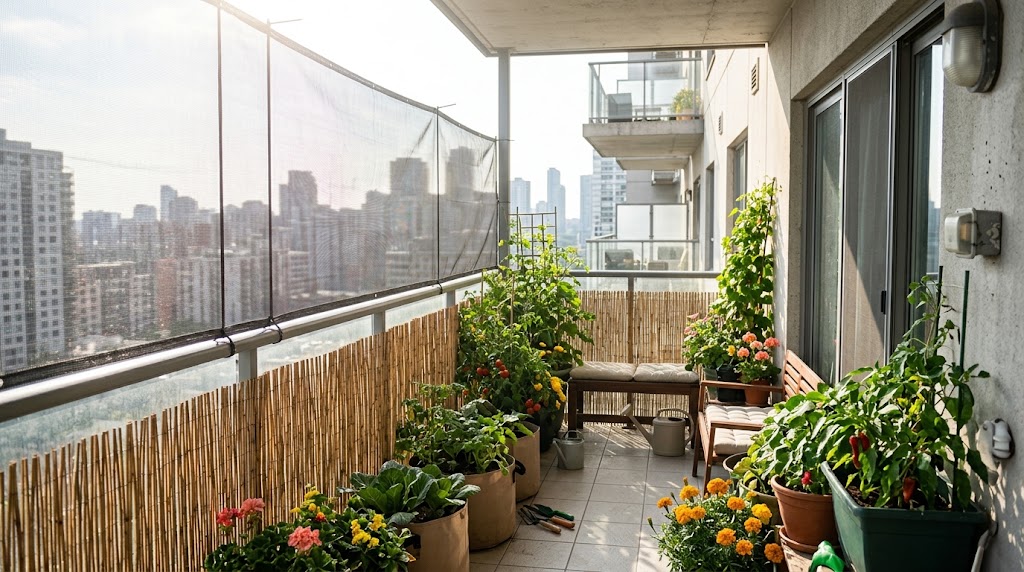
If you want to protect your container pots from strong high-rise gusts, installing the best windbreaks for balcony gardens is an essential weekend project.
When I moved to my 8th-floor apartment, I loved the panoramic city views, but strong wind gusts were a nightmare for my balcony plants. High-velocity winds constantly tipped over lightweight pots, tore tender leaves off tomato vines, and dried out container soil within hours. Down on the street, the weather felt calm, but up on my high-rise patio, wind currents swirled with astonishing force.
Installing wind barriers completely transformed my gardening experience. The key to high-rise wind protection isn’t building a solid wall that blocks all air—solid barriers create dangerous wind eddies that swirl over top edges. Instead, semi-porous windbreak screens filter wind speed, diffusing gusts by 50 to 60 percent while letting gentle air and sunlight pass through naturally.
According to urban microclimate research from the University of Florida IFAS Extension, porous windbreak screens filter wind velocity far more effectively than solid walls, reducing mechanical plant stress while preserving ambient light.
Here is your complete guide to the 10 best windbreaks for balcony gardens.
Why Using Windbreaks for Balcony Gardens Works
Filtering high-velocity gusts prevents pot tipping, protects delicate stems, and stabilizes container soil moisture.
Installing windbreaks for balcony gardens lowers soil surface evaporation, adds natural privacy from neighboring buildings, and creates a peaceful, sheltered microclimate for outdoor relaxation.

10 Best Windbreaks for Balcony Gardens
Here are the top 10 windbreak materials and screening options designed for apartment balconies.
1. Woven Bamboo Reed Fencing
Natural bamboo reed rolls attach easily to metal or glass balcony railings using heavy-duty zip ties. Bamboo diffuses wind gusts while adding warm tropical texture to concrete patios.
- Wind Reduction: ~55% speed reduction.
- Best For: Natural privacy and wind protection.
2. Polyethylene Garden Mesh Netting (50% Shade Cloth)
Specially engineered porous plastic netting that reduces wind velocity by half without trapping hot air or creating turbulent eddies over pot tops.
- Wind Reduction: 50% wind filtration.
- Best For: High-rise balconies exposed to extreme winds.
3. Living Evergreen Hedge Barriers
Placing heavy planters filled with tough evergreen shrubs (like dwarf boxwood or arborvitae) along outer railings creates a natural green windbreak that shelters inner herbs.
- Wind Reduction: 40% natural wind diffusion.
- Best For: Year-round evergreen privacy walls.
4. Outdoor Fabric Privacy Screen Panels
Heavy-duty UV-stabilized polyester panels featuring reinforced grommets that lace securely around railing spindles.
- Wind Reduction: ~60% wind reduction.
- Best For: Renters who want clean solid-color wind barriers.
5. Willow Twig Screening Rolls
Natural dark willow branches woven with wire offer a rustic, durable wind barrier that handles freezing winter weather effortlessly.
- Wind Reduction: ~50% wind filter.
- Best For: Natural winter-hardy patio barriers.
6. Transparent Polycarbonate Railing Shields
Sleek clear polycarbonate sheets mounted to balcony railings block cold wind gusts completely while preserving unobstructed city views and sunlight.
- Wind Reduction: 100% direct wind block.
- Best For: High-rise glass railings.
7. Lattice Trellises with Dense Vines
Wooden or plastic lattice trellises covered with climbing vines (like Star Jasmine or English Ivy) create dense living windbreaks.
- Wind Reduction: ~45% wind filter.
- Best For: Vertical wall and side-divider protection.
8. Heavy Heavy-Duty Railing Troughs
Placing wide, heavy trough planters continuously along the base of your railing creates a low-profile windbreak that stops low sweeping drafts.
- Wind Reduction: Blocks ground-level wind currents.
- Best For: Protecting short pots and seedlings.
9. Canvas Privacy Curtains with Tie-Downs
Outdoor weather-resistant canvas drapes hung from roof overhang rods that can be pulled closed during windstorms and tied back on calm days.
- Wind Reduction: Flexible wind protection.
- Best For: Covered balconies.
10. Upcycled Slat Wood Pallet Screens
Repurposed wooden pallets mounted vertically against side railings provide sturdy slatted windbreaks with built-in planter shelves.
- Wind Reduction: ~50% wind filtration.
- Best For: DIY budget-friendly screens.
Installation Tips for Windbreaks for Balcony Gardens
To keep your wind protection safe and secure on high-rise patios, follow these essential maintenance rules:
- Always Double-Secure Screencovers: Use double heavy-duty UV-resistant nylon zip ties or stainless steel clamps every 12 inches along top and bottom railing bars.
- Filter Air Rather Than Blocking Completely: Ensure your windbreak allows 40% to 50% air permeability so high-rise gusts pass through safely without pulling down your railing.
- Weight Down Border Containers: Place heavy gravel at the bottom of perimeter containers to anchor pots behind windbreak screens.
High-rise gardening guidelines from the Royal Horticultural Society (RHS) emphasize inspecting zip ties and mounting hardware every 6 months to ensure windbreak safety.
For step-by-step storm protection, read How to Protect Balcony Plants from High Winds.
For wind-hardy plant picks, explore 10 Best Wind Tolerant Balcony Plants for High-Rise Patios.
For natural foliage setups, check out How to Create a Balcony Privacy Screen with Plants.
Recommended Related Reading 📚
To keep your apartment outdoor space protected against weather, check out these related guides on our website:
- 🛡️ How to Protect Balcony Plants from High Winds – Step-by-step storm protection guide.
- 💨 10 Best Wind Tolerant Balcony Plants for High-Rise Patios – Wind-hardy container species.
- 🌿 How to Create a Balcony Privacy Screen with Plants – Natural foliage screening ideas.
Frequently Asked Questions
Do balcony windbreaks block sunlight from plants?
Semi-porous windbreaks (like 50% mesh netting, woven bamboo, and lattice vines) allow over 80% of ambient sunlight to filter through while diffusing harsh gusts.
How do I attach a windbreak to a solid glass balcony railing?
Use heavy-duty clamp-on brackets or suction-anchor clamps that hold bamboo or mesh screens securely without drilling into glass panels or aluminum frames.
Final Thoughts
High winds do not have to stop you from building a thriving apartment garden. By installing bamboo fencing, mesh netting, living evergreen barriers, or lattice screens, you can easily set up windbreaks for balcony gardens and enjoy a peaceful, wind-protected patio.
Which windbreak material will you install on your balcony first? Tell us in the comments below!