

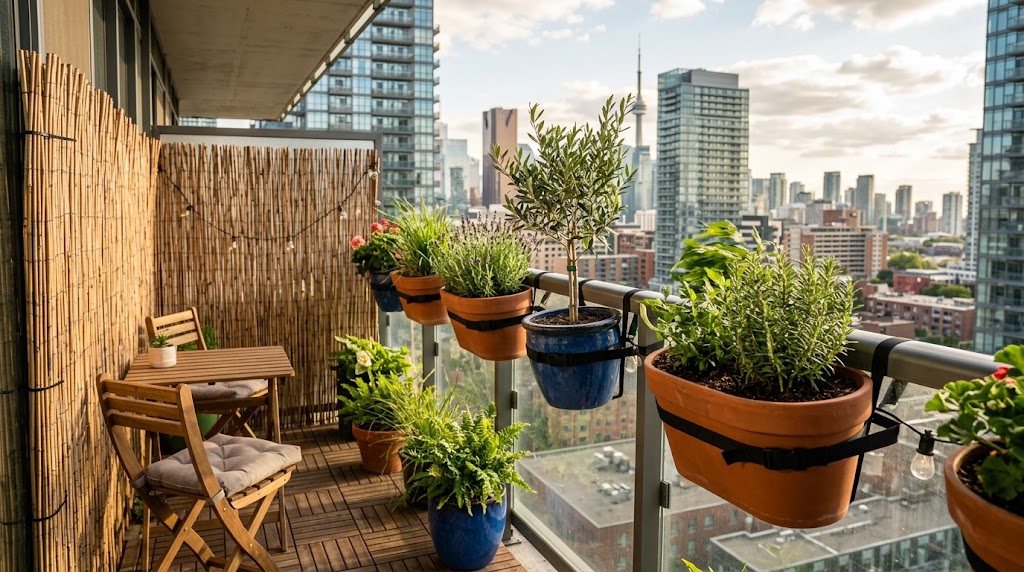
If you want to keep your potted containers safe during high-rise storms, learning how to protect balcony plants from high winds is essential.
When I moved into my 8th-floor apartment, I was unprepared for how intense balcony winds could get. Down on the street, the weather felt like a gentle breeze, but up on my high-rise patio, strong wind gusts knocked over lightweight plastic pots, snapped tender tomato stems, and tore delicate leaves to shreds.
Strong winds pose a serious hazard for urban gardeners. High-velocity gusts can blow unsecured flower pots off high-rise railings, create severe soil moisture evaporation, and cause physical branch snapping.
Fortunately, with a few smart container weighting techniques, windbreaks, and pot positioning strategies, you can easily safeguard your container garden against severe windstorms.
According to urban wind microclimate research from the University of Florida IFAS Extension, wind speed increases by up to 20 percent for every 5 floors up an urban apartment building due to unobstructed air currents between high-rise structures.
Here is your step-by-step guide on how to protect balcony plants from high winds.
Why You Must Protect Balcony Plants from High Winds
Wind causes physical stem damage, pot tipping, and severe moisture loss.
Taking action to protect balcony plants from high winds keeps your containers upright, prevents soil hydrophobic drying, safeguards public safety beneath your balcony, and ensures long-term plant health.

5 Easy Steps to Protect Balcony Plants from High Winds
Follow these 5 practical steps to secure your apartment patio against strong wind gusts.
Step 1: Group Pots Tightly Against Building Walls
Exterior brick and concrete walls act as natural wind shadows. Move lightweight containers away from outer railings and group them tightly against interior apartment walls. Grouping pots together also creates a micro-climate that reduces moisture loss.
Step 2: Use Heavy Planter Materials & Gravel Weight
Lightweight plastic pots tip over easily. Choose heavy glazed ceramic, terracotta, or concrete planters. Add a 2-inch layer of heavy gravel or river rocks at the bottom of containers before adding potting soil to lower the center of gravity.
Step 3: Install Woven Bamboo or Mesh Wind Screen Barriers
Attach woven bamboo reed fencing, outdoor privacy fabric, or 50% windbreak netting to your balcony railing using heavy-duty zip ties. A good windbreak filters wind speed by up to 60 percent without creating air turbulence.
Step 4: Stake Tall Vegetables & Flowers Securely
Tall crops like container tomatoes, peppers, and tall dahlias are vulnerable to snapping in wind. Insert sturdy bamboo stakes or metal cages deep into container soil and secure main stems using flexible soft garden ties.
Step 5: Secure Railing Containers with Double Zip Ties
Never rely on gravity or simple hooks to hold railing boxes during summer storms. Double-secure all hanging baskets and railing containers using heavy-duty UV-resistant nylon zip ties or metal safety clamps.
Best Windbreaks to Protect Balcony Plants from High Winds
Installing wind barriers reduces wind velocity while preserving natural sunlight:
- Woven Bamboo Reed Screens: Attractive natural look that diffuses wind speed efficiently.
- Polyethylene Windbreak Netting: Engineered specifically for gardens, netting reduces wind gusts by 50% without trapping heat.
- Perimeter Evergreens: Line outer railings with tough evergreens (like boxwoods or arborvitae) to create a living green windbreak for delicate inner herbs.
Horticultural guidelines from the Royal Horticultural Society (RHS) emphasize filtering wind rather than blocking it completely with solid walls, as solid barriers create turbulent air eddies that swirl over top edges.
If your balcony experiences constant high gusts, pair your windbreak with hardy plant choices from 10 Best Wind Tolerant Balcony Plants for High-Rise Patios.
To prevent fast evaporation, read how to Prevent Container Soil Drying Out Fast.
For smart pot positioning, review 10 Best Balcony Plant Layout Ideas for Small Spaces.
Recommended Related Reading 📚
To continue securing your apartment outdoor space, check out these related guides on our website:
- 💨 10 Best Wind Tolerant Balcony Plants for High-Rise Patios – Wind-hardy container species.
- 💧 How to Prevent Container Soil Drying Out Fast – Master soil moisture retention.
- 📐 10 Best Balcony Plant Layout Ideas for Small Spaces – Smart floor and vertical layout designs.
Frequently Asked Questions
What happens if wind knocks over a plant pot?
Immediately inspect roots and stems. If the root ball broke apart, gently re-pot the plant in fresh soil, trim off snapped branches, water thoroughly, and place the pot in shade for 3 days to recover from transplant shock.
Do windbreaks block sunlight on a balcony?
Semi-porous windbreak mesh or woven bamboo screens reduce wind velocity while letting over 85% of ambient sunlight pass through, keeping your balcony bright and growing.
Final Thoughts
High winds do not have to ruin your high-rise gardening experience. By grouping containers, weighting pots with gravel, staking tall crops, and installing simple railing windbreaks, you can easily protect balcony plants from high winds and enjoy a safe, thriving patio.
How do you protect your balcony plants during stormy weather? Share your wind-proofing tips in the comments below!