

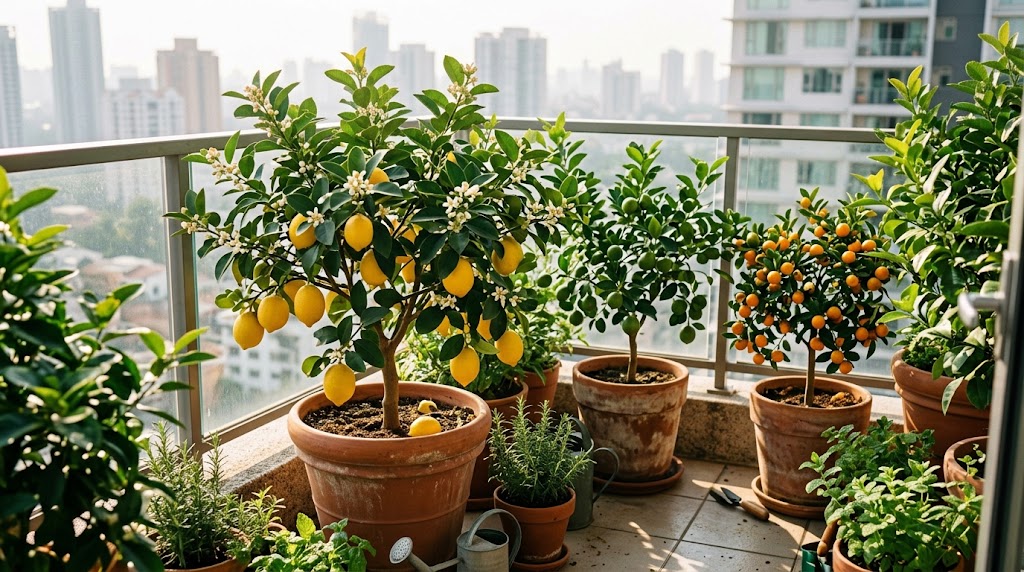
If you want to harvest sweet, organic lemons, limes, and oranges right from your apartment patio, choosing the best citrus trees for balcony containers is an easy, high-reward project.
When I first considered growing a fruit tree on my third-floor apartment balcony, friends told me I was crazy. Traditional citrus trees require deep orchard soil, warm southern climates, and dozens of feet of open backyard space. I assumed I would be stuck buying plastic-wrapped lemons and wax-coated limes from the grocery store forever.
Then I discovered true genetic dwarf citrus trees grafted onto dwarfing rootstocks (like Flying Dragon trifoliate rootstock). These specialized cultivars restrict the overall tree size to a manageable 4 to 6 feet tall without reducing fruit quality or harvest size. In fact, potted citrus trees produce full-sized, deeply flavorful, and incredibly juicy fruit while thriving inside 10- to 15-gallon container pots.
Growing potted citrus delivers a triple sensory reward: glossy evergreen foliage that stays green all year, intoxicating white blossoms that perfume your entire apartment whenever the balcony door opens, and fresh organic fruit picked seconds before squeezing over dinner or drinks.
According to container citrus research from the University of Florida IFAS Extension, container-grown dwarf citrus varieties thrive when provided with steady moisture, high-potassium nutrition, and at least six hours of daily solar radiation, producing reliable annual crops even in small urban spaces.
Here is your complete, bookmark-worthy guide to the 10 best citrus trees for balcony containers.
Why Growing Citrus Trees for Balcony Containers Works
Dwarf citrus cultivars develop compact root balls that adapt naturally to container living.
Selecting citrus trees for balcony containers allows urban gardeners to cultivate tropical fruit anywhere, move pots indoors to protect them from freezing winter temperatures, and enjoy year-round evergreen beauty on high-rise patios.

10 Best Citrus Trees for Balcony Containers
Here are the top 10 dwarf citrus species and cultivars that flourish in container pots on apartment balconies.
1. Improved Dwarf Meyer Lemon (Citrus × meyeri)
The Improved Meyer lemon is the undisputed champion of citrus trees for balcony containers. A natural hybrid between a standard lemon and a sweet mandarin orange, Meyer lemons feature smooth, thin golden-yellow skins and sweet, low-acid juice that is fantastic for cooking and lemonade.
- Fruit Characteristics: Thin-skinned, sweet, floral, and low-acid.
- Bloom Habit: Blooms and fruits almost continuously year-round.
- Container Size: 12- to 16-inch pot.
- Explore More: Compare Meyer lemons with other compact trees in 10 Best Fruit Trees for Apartment Balconies.
2. Dwarf Key Lime / Mexican Lime (Citrus aurantiifolia)
Key limes produce heavy clusters of small, golf-ball-sized greenish-yellow fruits with an intensely aromatic, tart flavor essential for genuine Key lime pies and summer cocktails.
- Fruit Characteristics: Small, intensely tart, and aromatic.
- Bloom Habit: Heavy spring and summer blooms.
- Container Size: 12- to 14-inch pot.
- Care Note: Thrives in blistering summer heat on south-facing balconies.
3. Calamondin Orange / Calamansi (Citrus mitis)
Calamondin is the easiest, most resilient citrus tree for beginners. It produces hundreds of small, glossy orange fruits that taste like sour, tangy mandarins, perfect for Asian marinades and citrus marmalades.
- Fruit Characteristics: Tart, sour-sweet, and vibrant orange.
- Bloom Habit: Ever-bearing with blossoms and fruit simultaneously.
- Container Size: 10- to 12-inch pot.
- Why It Excels: Exceptionally tolerant of low indoor humidity when wintered inside.
4. Dwarf Bearss Seedless Lime / Persian Lime (Citrus latifolia)
Bearss is the classic full-sized grocery store lime. It produces juicy, seedless, dark green limes that turn pale yellow when fully tree-ripened.
- Fruit Characteristics: Seedless, juicy, and richly acidic.
- Bloom Habit: Concentrated autumn and winter harvest.
- Container Size: 14- to 16-inch pot.
- Bonus: Stems are virtually thornless, making it safe for small balconies.
5. Dwarf Nagami Kumquat (Fortunella margarita)
Nagami kumquats produce charming oval, bright orange fruits that you eat whole—rind and all! The thick, sweet peel balances the pleasantly tart inner pulp.
- Fruit Characteristics: Sweet edible skin with a tart center.
- Bloom Habit: Late summer blooms with winter fruit.
- Container Size: 12- to 14-inch pot.
- Cold Tolerance: One of the cold-hardiest citrus varieties (tolerates down to 20°F / -6°C).
6. Dwarf Washington Navel Orange (Citrus sinensis)
Washington Navel is famous for seedless, sweet, easy-to-peel eating oranges. Grafted onto dwarf rootstocks, it stays under 5 feet while producing full-sized, juicy fruit.
- Fruit Characteristics: Sweet, seedless, and classic table orange flavor.
- Bloom Habit: Fragrant spring blooms; ripens from late autumn to winter.
- Container Size: 15- to 20-gallon pot.
- Light Needs: Requires 8 hours of intense direct sunlight.
7. Dwarf Owari Satsuma Mandarin (Citrus unshiu)
Satsumas produce sweet, seedless, “zipper-skin” mandarins that peel effortlessly in seconds. It is loved by urban growers for its cold hardiness and heavy yields.
- Fruit Characteristics: Incredibly sweet, tender, and easy to peel.
- Bloom Habit: Early autumn harvest.
- Container Size: 14- to 16-inch container.
- Why It Excels: Handles chilly autumn balcony drops down to 26°F without fruit damage.
8. Australian Finger Lime (Citrus australasica)
Known as “citrus caviar,” this exotic Australian native produces elongated fruits filled with round, pearl-like juice vesicles that burst with lime flavor in your mouth.
- Fruit Characteristics: Unique gourmet lime pearls in pink, red, or green.
- Bloom Habit: Late spring blooms with autumn pearls.
- Container Size: 10- to 12-inch pot.
- Container Tip: Naturally compact and shrub-like, ideal for narrow patios.
9. Dwarf Kaffir / Makrut Lime (Citrus hystrix)
Grown primarily for its highly aromatic, hourglass-shaped double leaves rather than its bumpy fruit, Makrut lime foliage is an essential fragrant staple in Thai and Southeast Asian curries.
- Fruit Characteristics: Bumpy rind with aromatic culinary leaves.
- Bloom Habit: Grown year-round for continuous leaf harvesting.
- Container Size: 12-inch pot.
- Care Tip: Snip fresh leaves regularly to encourage dense, bushy branching.
10. Dwarf Eureka Lemon (Citrus limon)
The classic true lemon. Eureka produces crisp, acidic, market-quality lemons with thick, oil-rich rinds perfect for zesting and baking.
- Fruit Characteristics: Classic acidic tartness with high juice volume.
- Bloom Habit: Heavy spring and summer crops.
- Container Size: 15-gallon planter.
- Privacy Bonus: Dense evergreen branches create an excellent privacy barrier—see our design ideas in 10 Best Dwarf Trees for Balcony Privacy Screens.
Balcony Citrus Tree Selection Matrix
Use this quick-reference table to select the ideal citrus tree based on your patio’s sun exposure and winter sheltering space:
| Citrus Variety | Primary Flavor & Use | Container Size | Minimum Direct Sun | Cold Hardiness Threshold | Ideal Winter Care |
|---|---|---|---|---|---|
| Dwarf Meyer Lemon | Sweet / Low-Acid Squeezer | 12–16 Inches | 6 Hours | 32°F (0°C) | Bright Window Indoors |
| Dwarf Key Lime | Tart Juice & Cocktail Lime | 12–14 Inches | 6–8 Hours | 35°F (2°C) | Warm Window Indoors |
| Calamondin Orange | Sour Marinade & Marmalade | 10–12 Inches | 5–6 Hours | 25°F (-4°C) | Indoor Room / Patio |
| Bearss Lime | Classic Seedless Bartender | 14–16 Inches | 6 Hours | 30°F (-1°C) | Bright Window Indoors |
| Nagami Kumquat | Sweet Edible Peel Snack | 12–14 Inches | 6 Hours | 20°F (-6°C) | Cold-Hardy Patio / In |
| Washington Navel | Sweet Table Peeling Orange | 16–18 Inches | 8 Hours | 28°F (-2°C) | Sunniest Window Indoors |
| Owari Satsuma | Sweet Seedless Mandarin | 14–16 Inches | 6 Hours | 24°F (-4°C) | Cold-Hardy Patio / In |
| Finger Lime | Citrus Caviar Pearls | 10–12 Inches | 6 Hours | 32°F (0°C) | Sunny Window Indoors |
| Makrut Lime | Aromatic Asian Curry Leaves | 12 Inches | 5–6 Hours | 32°F (0°C) | Sunny Kitchen Sill |
| Eureka Lemon | Tart Baking & Zesting | 16 Inches | 7–8 Hours | 32°F (0°C) | Bright Sun Indoors |
Care Tips for Citrus Trees for Balcony Containers Across All Seasons
To guarantee high yields and avoid leaf drop, follow these four seasonal container rules:
1. Spring & Summer Feeding (High-Nitrogen & Micronutrients)
Citrus trees are heavy feeders. Unlike standard houseplants, citrus requires steady zinc, iron, magnesium, and nitrogen. Apply an organic citrus-specific fertilizer once a month from March through August. Look for formulas with an N-P-K ratio around 5-2-6 enriched with chelated trace minerals.
2. Deep Watering and Soil Aeration
Citrus roots love moisture, but hate sitting in soggy mud. Always plant in containers with multiple large drainage holes using a chunky, fast-draining mix (such as 60% standard potting mix, 20% coarse perlite, and 20% orchid bark). Water deeply only when the top 2 to 3 inches of soil feel dry to the touch. Review our soil recipes in How to Prevent Container Soil Drying Out Fast.
3. Summer-to-Autumn Transition (Hardening Off in Reverse)
In temperate zones, bring potted citrus indoors before night temperatures drop consistently below 50°F (10°C). Moving a tree suddenly from a bright balcony into a dim, heated living room causes shock and massive leaf drop. Acclimate your tree over two weeks: move it first into deep balcony shade for seven days, then into your brightest indoor window.
4. Winter Indoor Maintenance (Combating Dry Air)
Indoor winter heating dries out ambient humidity, which can attract spider mites and scale insects. Place a pebble humidity tray filled with water beneath your pot (ensuring the container base rests above the water line), and mist leaves weekly. For full cold-weather prep, follow our guide on How to Winterize Your Apartment Balcony Garden.
Integrated pest management guidelines from the University of California Agriculture and Natural Resources (UC ANR) recommend spraying indoor citrus leaves with cold-pressed organic neem oil or insecticidal soap at the first sign of scale or webbing to keep trees healthy throughout winter dormancy.
Recommended Related Reading 📚
To continue expanding your apartment fruit garden, explore these related guides on our website:
- 🍋 10 Best Fruit Trees for Apartment Balconies – Full guide to container apples, peaches, figs, and citrus.
- 🌲 10 Best Dwarf Trees for Balcony Privacy Screens – Dense potted trees for natural patio privacy.
- ❄️ How to Winterize Your Apartment Balcony Garden – Step-by-step cold-weather container protection.
Frequently Asked Questions About Citrus Trees for Balcony Containers
Do container citrus trees need two trees to cross-pollinate and produce fruit?
No! Almost all popular dwarf citrus trees (including Meyer lemons, Key limes, calamondins, and navel oranges) are self-fertile. A single potted tree on your balcony will produce flowers and bear full crops of fruit entirely on its own.
Why are the flower buds dropping off my balcony citrus tree?
Blossom drop is typically caused by three things: extreme temperature swings, erratic watering (letting soil dry bone-dry and then soaking it), or sudden indoor-outdoor transitions. Keep watering consistent and protect blooming trees from cold drafts.
What should I do if my citrus leaves turn yellow with green veins?
Yellowing leaves with prominent dark green veins indicates iron chlorosis, a common micronutrient deficiency in container citrus. Apply a water-soluble chelated iron spray or liquid citrus fertilizer to restore deep emerald color within two weeks.
Final Thoughts
Growing real citrus trees on an apartment balcony is one of the most satisfying experiences in urban container gardening. By planting a dwarf Meyer lemon, Key lime, or calamondin orange, you can easily cultivate citrus trees for balcony containers and enjoy fragrant blossoms and fresh organic harvests all year long.
Make sure to bookmark this guide for your spring potting and autumn winterizing schedules!
Which citrus tree are you most excited to harvest on your balcony? Share your container gardening questions and setups in the comments below!