
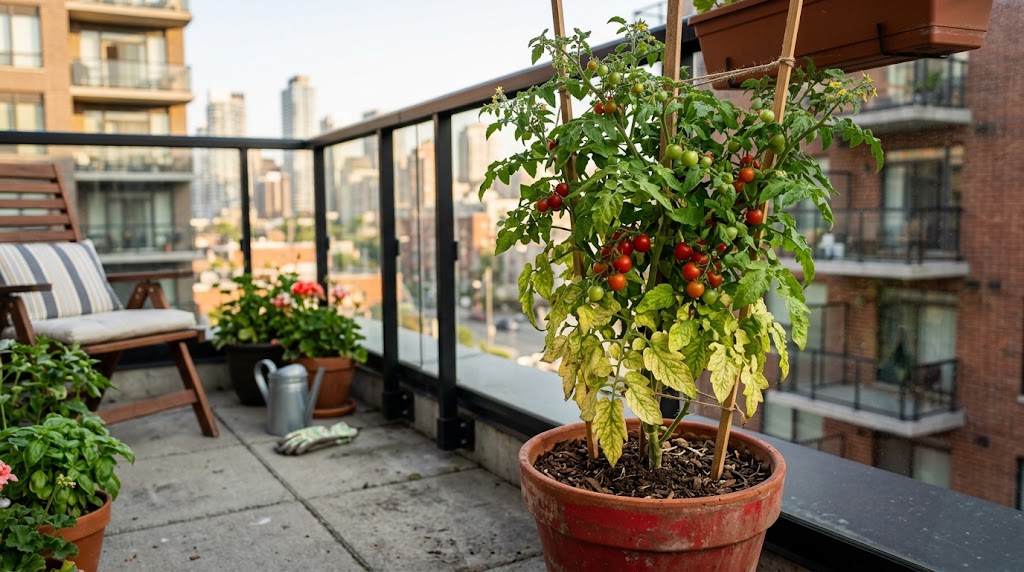
If your balcony tomato leaves are turning yellow, you are not alone.. Growing tomatoes on a balcony is one of the most rewarding small-space gardening projects. There is nothing quite like stepping outside your apartment door and picking fresh, sun-warmed tomatoes for a afternoon salad.
However, few things panic a container gardener faster than looking out at their patio and seeing bright yellow leaves on their prized tomato plant.
When I first started growing container tomatoes on my 4th-floor balcony, I freaked out the moment the lower leaves began turning pale yellow. I thought the whole plant was dying! But over the years, I learned that yellow leaves are simply your plant’s way of sending a text message saying, “Hey, I need a little help here!”
In this guide, we will break down the 5 most common reasons your balcony tomato leaves are turning yellow and the exact steps to fix them today.
Quick Diagnosis: What Do Your Yellow Leaves Look Like?
Before diving into the fixes, use this quick chart to match what you are seeing on your balcony:
| Symptom on Plant | Likely Cause | Quick Fix |
|---|---|---|
| Bottom leaves turn yellow & feel soft/mushy | Overwatering / Poor Drainage | Let soil dry out; check pot drainage holes |
| Lower leaves turn pale green, then yellow | Nitrogen Deficiency | Apply a balanced organic tomato fertilizer |
| Whole plant looks pale yellow & grows slowly | Lack of Sunlight | Move pot to a spot with 6–8 hours of sun |
| Yellow leaves with dark brown spots | Fungal Disease (Early Blight) | Prune affected leaves; avoid wetting foliage |
| Speckled yellow leaves with tiny webs under leaves | Spider Mites / Pests | Spray with neem oil or insecticidal soap |
Reason 1: Overwatering Balcony Tomato Leaves
Overwatering is the number one killer of balcony potted tomatoes.
Because balcony containers sit on hard surfaces like concrete, wood, or tile, water can sometimes collect at the bottom of the pot. When tomato roots sit in waterlogged soil, they drown. Deprived of oxygen, the roots stop absorbing nutrients, causing the bottom leaves to turn soft and yellow.
How to Fix It:
- The Finger Test: Before watering, stick your finger two inches deep into the potting mix. If it feels moist, wait another day or two. Only water when the top two inches feel completely dry.
- Check Your Drainage Holes: Ensure your container has at least 3 to 4 large drainage holes at the bottom.
- Elevate Your Pot: Place your pot on pot feet or small wooden blocks. This raises the pot slightly above the balcony floor, allowing excess water to drain freely.
Reason 2: Nitrogen Deficiency (Hungry Tomato Plants)
Tomatoes are extremely heavy feeders. When grown in small balcony containers, their roots quickly absorb all the nutrients available in the potting mix.
If your tomato plant lacks nitrogen, it cannot produce chlorophyll (the green pigment). The plant will pull remaining nitrogen from older, lower leaves to feed new growth at the top. As a result, the bottom leaves turn pale yellow while the top of the plant stays green.
How to Fix It:
- Feed Regularly: Give your potted tomatoes a liquid organic tomato fertilizer (rich in Nitrogen, Phosphorus, and Potassium) every 7 to 14 days during the growing season.
- Use Quality Potting Mix: Always start the season with fresh potting soil enriched with organic compost, rather than recycled old dirt.
Reason 3: Not Enough Direct Sunlight
Tomatoes are sun-worshiping plants. They require at least 6 to 8 hours of direct sunlight every day to thrive and produce juicy fruit.
Balconies can be tricky because building overhangs, walls, or neighboring apartment buildings often block natural light. If your tomato plant does not receive enough light, its leaves will turn pale yellow, drop off, and the stem will become tall, thin, and “leggy.”
How to Fix It:
- Move to the Sunniest Spot: Shift your pot to the southern or western edge of your balcony where it catches the maximum hours of light.
- Use Reflective Surfaces: Placing a light-colored outdoor rug or reflective panel behind your pot can bounce extra light back onto the plant’s lower leaves.
Reason 4: Fungal Diseases (Early Blight)
If you notice yellow leaves covered in dark brown or black spots—often looking like tiny bullseye targets—your plant likely has a fungal infection called Early Blight.
Fungal spores thrive in warm, humid conditions. On balconies, blight often happens when water splashes off the potting soil onto the lower leaves during morning waterings.
How to Fix It:
- Prune Lower Foliage: Cut off any yellow or spotted leaves near the base of the plant using clean, sanitized garden shears. Dispose of them in the trash (never compost diseased leaves).
- Water the Roots, Not the Leaves: Always direct your watering can spout straight at the soil surface. Keep the stems and leaves completely dry.
- Mulch the Soil: Add a 1-inch layer of straw or wood chips on top of the potting soil to prevent dirt from splashing upward.
Reason 5: Balcony Pests (Spider Mites & Aphids)
Balcony gardens can sometimes attract sap-sucking pests like spider mites or aphids.
Spider mites love hot, dry balcony environments. They suck the vital juices out of tomato leaves, leaving behind tiny yellow speckles. If left untreated, the whole leaf turns yellow, bronze, and crisp.
How to Fix It:
- Inspect Under the Leaves: Look closely under yellowing leaves for tiny webbing or small green/black bugs.
- Spray Natural Insecticidal Soap: Spray affected leaves thoroughly with organic neem oil or insecticidal soap once a week until pests are gone.
Frequently Asked Questions (FAQ)
Should I cut off yellow leaves on my tomato plant?
Yes! Once a leaf turns completely yellow, it can no longer produce energy for the plant. Pruning away yellow lower leaves improves airflow, reduces disease risks, and allows the plant to focus its energy on growing healthy green leaves and ripening tomatoes.
Can yellow tomato leaves turn green again?
If yellowing is caused by slight underwatering, leaves may bounce back. However, if a leaf has turned completely yellow due to nitrogen loss, overwatering damage, or fungal blight, it will not turn green again. It is best to prune it off cleanly.
How often should I water balcony container tomatoes?
During mild spring weather, watering every 2 to 3 days is usually enough. However, during hot summer months, large balcony tomato pots may need daily deep watering in the early morning.
Summary Checklist for Healthy Balcony Tomatoes
To keep your balcony tomato leaves bright green and healthy all summer long:
- ✅ Always test soil moisture before watering.
- ✅ Ensure your pot has clear drainage holes raised off the balcony floor.
- ✅ Feed your plant with organic tomato fertilizer every 10–14 days.
- ✅ Provide 6 to 8 hours of direct daily sunlight.
- ✅ Prune off yellow lower foliage promptly to boost airflow.
By following these simple steps, your balcony tomato plant will recover quickly and reward you with a bountiful harvest of delicious homemade tomatoes!