
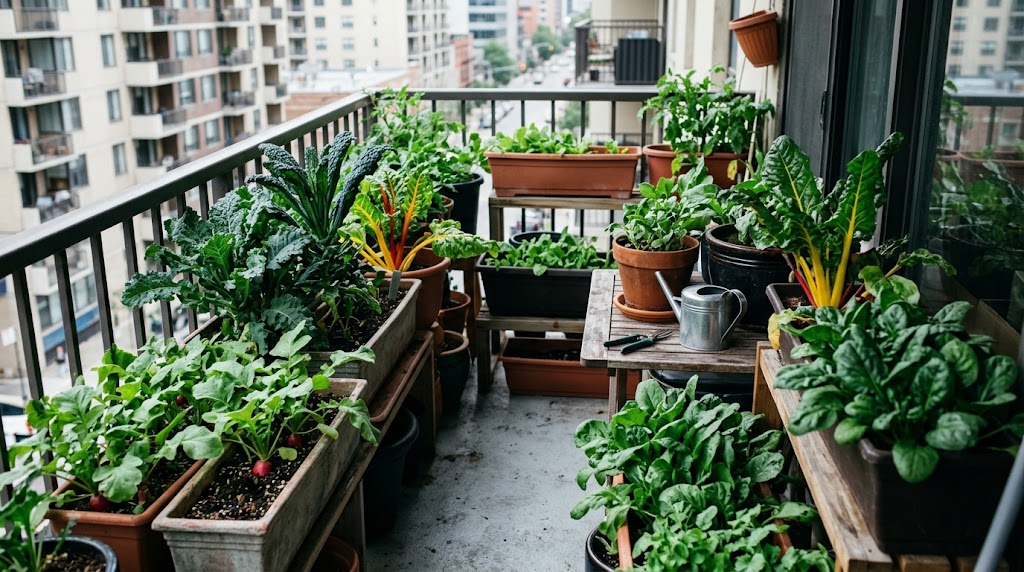
If you want to grow fresh edible crops on a low-light patio, selecting the best shade tolerant balcony vegetables is an easy, high-yield solution.
When I moved into my north-facing apartment three years ago, I felt discouraged about starting an edible garden. My balcony received zero hours of direct beam sunlight, shaded completely by tall neighboring towers and an overhead concrete balcony ceiling. Gardening books frequently claim that you must have six to eight hours of blazing full sun to grow any food at home. I worried that my dreams of harvesting crisp greens and fresh roots right outside my kitchen door were impossible.
However, container vegetable gardening in low light is not only possible—in many ways, it is actually easier than growing in scorching full sun. While fruiting plants like large beefsteak tomatoes and melons demand blistering heat, leafy greens and compact root crops evolved along forest floors and under shaded canopies where diffused ambient light rules.
In partial shade, container soil stays moist longer, plants rarely suffer from heat stress, and delicate leafy crops resist bolting (premature flowering) far better than those baking on south-facing patios.
According to vegetable research from the University of Illinois Extension, edible crops grown primarily for their leaves, stems, or underground roots thrive with as little as three to four hours of filtered or indirect ambient light daily.
Here is your complete, bookmark-worthy guide to the 10 best shade tolerant balcony vegetables.
Why Growing Shade Tolerant Balcony Vegetables Works
Shaded apartment balconies offer several distinct ecological advantages over hot, sun-drenched outdoor spaces.
When you grow shade tolerant balcony vegetables, cooler soil temperatures prevent rapid evaporation, meaning you spend less time lugging watering cans across your living room. Delicate greens stay sweet and tender rather than turning bitter and fibrous, allowing urban gardeners to enjoy continuous harvests from early spring straight through late autumn.

10 Best Shade Tolerant Balcony Vegetables for Apartments
Here are the top 10 culinary vegetable crops that thrive in partial shade and bright ambient light on apartment patios.
1. Baby Spinach (Spinacia oleracea)
Spinach is the undisputed royalty among shade tolerant balcony vegetables. In full summer sun, spinach bolts immediately, sending up bitter seed stalks. In cool balcony shade, it produces dense rosettes of sweet, dark green leaves all season.
- Light Needs: 3 to 4 hours of indirect or morning light.
- Pot Depth: 6 to 8 inches.
- Harvest Style: Cut-and-come-again outer leaves.
2. Rainbow Swiss Chard (Beta vulgaris subsp. cicla)
Swiss chard combines high nutritional value with breathtaking ornamental beauty. Its ruby red, golden yellow, and bright pink stems brighten up dark patio corners while producing continuous harvests of tender greens.
- Light Needs: 3 to 5 hours of filtered light.
- Pot Depth: 8 to 10 inches.
- Harvest Style: Snip outer stalks 1 inch above soil line.
3. Crisp Radishes (Raphanus sativus)
Radishes are the fastest-yielding root crop in small-space gardening. In bright shade, radish roots swell steadily without becoming woody or overly spicy.
- Light Needs: 3 to 4 hours of ambient light.
- Pot Depth: 6 inches.
- Days to Harvest: 21 to 28 days from seed.
4. Tuscan & Curly Kale (Brassica oleracea var. sabellica)
Kale is an exceptionally rugged superfood that handles low light and cold autumn temperatures effortlessly. Shaded kale leaves remain tender, sweet, and mild compared to tough sun-baked plants.
- Light Needs: 3 to 4 hours of indirect light.
- Pot Depth: 10 to 12 inches.
- Harvest Style: Harvest lower leaves, allowing central stalk to grow like a mini palm tree.
5. Loose-Leaf Lettuce (Lactuca sativa)
Varieties like Butterhead, Black-Seeded Simpson, and Oakleaf excel in shaded patio containers. Growing lettuce in partial shade prevents tip burn and extends your fresh salad season through mid-summer.
- Light Needs: 2 to 4 hours of morning sun or bright indirect light.
- Pot Depth: 6 inches.
- Pairing Tip: Pair lettuce with varieties from our guide on 10 Best Small Space Balcony Vegetables.
6. Arugula / Rocket (Eruca vesicaria)
Arugula is famous for its peppery, nutty flavor. Grown in hot sun, it becomes overwhelmingly pungent and bolts within weeks. In container shade, it produces lush flushes of mild, gourmet salad leaves.
- Light Needs: 3 hours of ambient light.
- Pot Depth: 6 inches.
- Days to Harvest: 30 days from seed.
7. Asian Greens (Bok Choy & Tatsoi)
Bok choy and spoon-leaf tatsoi form compact, crisp rosettes that thrive in cool, shaded conditions. They grow rapidly and make fantastic homegrown additions to stir-fries and soups.
- Light Needs: 3 to 4 hours of light.
- Pot Depth: 8 inches.
- Days to Harvest: 35 to 45 days.
8. Beets for Greens and Roots (Beta vulgaris)
While developing giant beet roots requires moderate sun, growing beets in partial shade produces gourmet baby beets and delicious, nutrient-packed ruby beet greens.
- Light Needs: 4 hours of filtered light.
- Pot Depth: 10 to 12 inches.
- Harvest Style: Harvest outer baby greens while root crowns expand below.
9. Bush Peas & Sugar Snap Peas (Pisum sativum)
Compact bush peas tolerate partial shade and cool balcony microclimates, producing lovely white blossoms followed by crisp, sweet edible pods.
- Light Needs: 4 to 5 hours of indirect light.
- Pot Depth: 8 to 10 inches.
- Harvest Style: Pick pods frequently when plump to encourage continuous flowering.
10. Green Onions & Scallions (Allium fistulosum)
Scallions have slender, upright hollow stems and shallow root systems that require very little direct sunlight. They grow tightly in small rectangular window boxes.
- Light Needs: 3 hours of light.
- Pot Depth: 6 inches.
- Harvest Style: Snip green tops with kitchen shears; they regrow continuously.
Low-Light Vegetable Performance Matrix
Use this quick-reference table to design your low-light container garden according to available balcony light:
| Vegetable Crop | Minimum Sunlight Needed | Ideal Pot Depth | Days to First Harvest | Yield Potential in Shade |
|---|---|---|---|---|
| Baby Spinach | 3 Hours Indirect | 6 Inches | 28–35 Days | ⭐⭐⭐⭐⭐ Exceptional |
| Swiss Chard | 3–4 Hours Filtered | 8–10 Inches | 45 Days | ⭐⭐⭐⭐⭐ Exceptional |
| Loose-Leaf Lettuce | 2–3 Hours Filtered | 6 Inches | 30 Days | ⭐⭐⭐⭐⭐ Exceptional |
| Radishes | 3–4 Hours Ambient | 6 Inches | 21–25 Days | ⭐⭐⭐⭐ High |
| Tuscan Kale | 3–4 Hours Indirect | 10 Inches | 50 Days | ⭐⭐⭐⭐ High |
| Bok Choy | 3–4 Hours Filtered | 8 Inches | 35–40 Days | ⭐⭐⭐⭐ High |
| Arugula | 3 Hours Indirect | 6 Inches | 30 Days | ⭐⭐⭐⭐⭐ Exceptional |
| Bush Peas | 4–5 Hours Filtered | 8–10 Inches | 55–60 Days | ⭐⭐⭐ Moderate |
| Baby Beets | 4 Hours Indirect | 10–12 Inches | 50 Days | ⭐⭐⭐ Moderate |
| Green Onions | 3 Hours Indirect | 6 Inches | 40 Days | ⭐⭐⭐⭐ High |
Care Tips for Shade Tolerant Balcony Vegetables in Containers
To maximize yields from your shaded container crops, follow these essential maintenance rules:
1. Watch Out for Overwatering
Because shaded balconies do not experience blazing solar heat, container soil dries out much more slowly. Never water on a fixed rigid schedule. Always insert your finger 2 inches into the potting soil first; if it feels damp, wait another day before adding water. Pair containers with good drainage or explore 10 Best Self-Watering Planters for Balcony Gardens to prevent root rot.
2. Maximize Ambient Light with Reflective Surfaces
Position your planters against white or light-colored exterior apartment walls. Light-colored surfaces reflect available sky radiation onto lower leaves, boosting photosynthesis naturally.
3. Use Light, Well-Aerated Potting Mixes
Shaded roots need plenty of oxygen. Avoid heavy garden topsoil that compacts and stays waterlogged. Mix 50% high-quality potting mix, 30% coco coir, and 20% perlite to ensure fast drainage. Check our recipe guide in How to Prevent Container Soil Drying Out Fast.
4. Feed with Balanced Liquid Organic Fertilizers
Plants growing in lower light synthesize sugars at a steady, moderate pace. Avoid applying high-nitrogen synthetic fertilizers, which cause weak, leggy, watery stems. Instead, apply a half-strength organic seaweed or fish emulsion fertilizer once every three weeks.
Container horticulture guidelines from the Royal Horticultural Society (RHS) emphasize spacing shaded crops slightly farther apart than full-sun plants to ensure maximum air circulation and light penetration across inner leaves.
For ornamental low-light patio design, combine your edible containers with varieties from our guide on 10 Best Low Light Balcony Plants for North-Facing Apartments.
Recommended Related Reading 📚
To continue expanding your apartment food garden across all lighting conditions, explore these related guides on our website:
- 🥬 10 Best Low Light Balcony Plants for North-Facing Apartments – Transform shaded balconies into lush green retreats.
- 🥗 10 Best Small Space Balcony Vegetables for Apartments – Compact, high-yield container crops for patios.
- 💧 How to Prevent Container Soil Drying Out Fast – Master soil moisture balance in container gardens.
Frequently Asked Questions About Shade Tolerant Balcony Vegetables
Can vegetables really grow on a balcony that gets zero direct sunlight?
Yes! Leafy greens like spinach, loose-leaf lettuce, arugula, and Swiss chard grow successfully in bright indirect ambient light (light reflected from the open sky and surrounding buildings) without ever needing direct beam sunlight.
Why do fruiting vegetables like tomatoes and peppers struggle in shade?
Fruiting crops require high energy levels to develop flower blossoms and convert starches into fruit sugars. Without at least 6 hours of direct sun, tomatoes and peppers produce lush green leaves but few flowers and little to no fruit. Leafy greens, on the other hand, only need to produce foliage, which requires far less solar energy.
What pests should I watch for on a shaded balcony garden?
Because shaded environments stay cool and humid, keep an eye out for slugs, snails, and fungus gnats. Ensure pots have good drainage, avoid splashing water onto leaves, and place yellow sticky traps near soil surfaces to intercept pests early.
Final Thoughts
A shaded or north-facing apartment patio should never keep you from harvesting delicious homegrown food. By planting spinach, Swiss chard, radishes, kale, and bok choy, you can easily grow shade tolerant balcony vegetables and enjoy fresh organic salads picked right outside your door all season long.
Make sure to bookmark this guide for your spring and autumn planting schedules!
Which shade-tolerant vegetable will you plant on your balcony first? Tell us about your low-light garden setup in the comments below!