

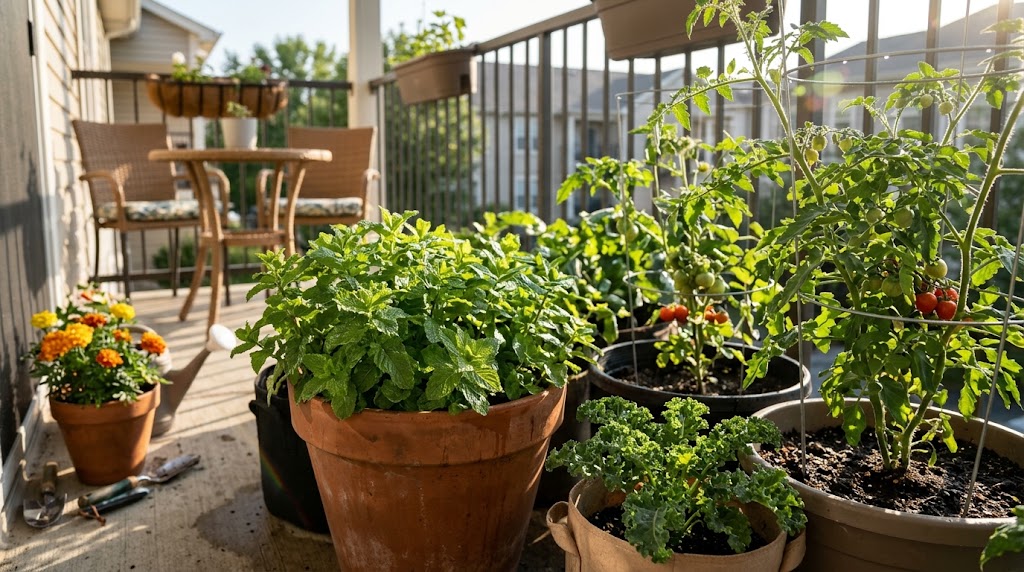
If you want to control aggressive mint runners while repelling pests across your container garden, choosing the right companion plants for balcony mint is an easy, high-impact strategy.
When I first started balcony gardening, mint was one of the very first herbs I planted. I loved having fresh spearmint and peppermint right outside my door for morning herbal teas and summer drinks. However, I made the classic beginner’s mistake: I planted a single mint sprig directly into a shared rectangular planter alongside my parsley, thyme, and basil. Within six weeks, the mint sent underground runners (rhizomes) winding throughout the entire soil box, strangling every other herb and completely taking over the container.
That painful lesson taught me the golden rule of container gardening: mint is a powerhouse companion plant, but only when you understand how to manage its aggressive nature. Mint produces rich concentrations of menthol and aromatic volatile oils that naturally repel destructive garden pests like flea beetles, cabbage loopers, aphids, spider mites, and even small rodents.
By utilizing smart spatial arrangement techniques—such as placing a dedicated, isolated pot of mint directly adjacent to vulnerable container crops—you unlock all the potent organic pest-repellent benefits of mint without risking your other plants’ root systems.
According to Integrated Pest Management research from the University of California Agriculture and Natural Resources (UC ANR), the strong volatile monoterpenes released by mint foliage mask the natural odors of host vegetables, reducing pest colonization by up to 50 percent in containerized garden spaces.
Here is your complete, bookmark-worthy guide to the 10 best companion plants for balcony mint.
Why Growing Companion Plants for Balcony Mint Works So Well
Mint acts as an organic aromatic bodyguard for nearby container crops.
Selecting companion plants for balcony mint confuses chewing insects, attracts predatory hoverflies and parasitic micro-wasps when allowed to flower, and creates a pest-resistant barrier that protects your edible patio crops without synthetic chemical sprays.

10 Best Companion Plants for Balcony Mint
Here are the top 10 companion species that benefit most from being placed directly next to container mint on apartment balconies.
1. Balcony Tomatoes (Solanum lycopersicum)
Potted tomatoes are among the highest-value companion plants for balcony mint. The pungent menthol scent of nearby mint masks tomato foliage from destructive hornworms, whiteflies, and aphids while improving overall plant vigor.
- Primary Benefit: Repels hornworms, whiteflies, and aphids.
- Arrangement Tip: Place an 8-inch pot of mint directly at the base of your 5-gallon tomato container. Explore our complete guide on 10 Best Companion Plants for Balcony Tomatoes.
2. Container Cabbage & Kale (Brassicas)
Cabbage family crops (kale, bok choy, and collards) are notoriously plagued by cabbage moths, cabbage loopers, and flea beetles. Placing mint pots next to brassicas creates an impenetrable sensory shield that stops moths from laying eggs on tender leaves.
- Primary Benefit: Eliminates cabbage looper caterpillars and flea beetles.
- Arrangement Tip: Flank your kale planter boxes on both sides with potted peppermint.
3. Potted Cucumbers (Cucumis sativus)
Cucumbers frequently fall victim to destructive striped and spotted cucumber beetles that transmit deadly bacterial wilt. Mint vapors naturally repel cucumber beetles and discourage sap-sucking thrips.
- Primary Benefit: Deterrent against cucumber beetles and fungal vectors.
- Arrangement Tip: Set a hanging basket of mint above climbing cucumber trellises. Read our companion pairing guide in 10 Best Companion Plants for Balcony Cucumbers.
4. French Marigolds (Tagetes patula)
French marigolds pair synergistically with mint to form a dual-layered insect defense network. Marigolds secrete root compounds that suppress nematodes while mint repels flying beetles.
- Primary Benefit: Multi-tier pest deterrence and pollinator magnetism.
- Arrangement Tip: Group terracotta pots of marigolds and mint together along outer balcony railings.
5. Italian Flat-Leaf Parsley (Petroselinum crispum)
Parsley shares mint’s love for consistent moisture and partial shade. While they should never share the same pot, placing separate pots side by side creates a thriving, low-light culinary nook.
- Primary Benefit: Shared ambient humidity and kitchen convenience.
- Explore More Shade Herbs: For low-light herbal advice, explore 10 Best Shade Tolerant Herbs for Balconies.
6. Potted Carrots & Radishes (Root Crops)
Carrot rust flies and flea beetles destroy crisp root crops. Mint’s strong essential oils disguise the earthy smell of carrots and radishes, preventing root fly females from depositing eggs in the soil.
- Primary Benefit: Masks root crops from carrot rust flies and tunneling larvae.
- Arrangement Tip: Rest a small pot of mint right on top of deep carrot trough containers.
7. Sweet Bell & Chili Peppers (Capsicum annuum)
Peppers love summer heat, but aphids frequently cluster under tender leaf joints. Mint acts as a biological repellent, keeping aphid populations from exploding on your balcony pepper plants.
- Primary Benefit: Aphid deterrence and hoverfly attraction.
- Arrangement Tip: Place mint pots between sunny pepper planters.
8. Potted Strawberries (Fragaria ananassa)
Sweet strawberries often attract slugs, snails, and crawling insects that chew through ripening fruit. Mint’s sharp scent and physical proximity help deter ground crawlers from invading berry pots.
- Primary Benefit: Deters slugs, snails, and small rodents.
- Arrangement Tip: Position mint pots adjacent to strawberry towers.
9. Garden Peas & Bush Beans (Legumes)
Legumes fix nitrogen into the surrounding environment, while mint acts as an aromatic bodyguard, deterring bean beetles and spider mites that love webbing across legume foliage.
- Primary Benefit: Pest protection against Mexican bean beetles.
- Arrangement Tip: Place mint containers near climbing pea trellises.
10. Oregano & Marjoram (Pungent Culinary Herbs)
Oregano and mint create a powerful aromatic perimeter along balcony railings that discourages annoying urban pests like mosquitoes, flies, and gnats from lingering near patio seating.
- Primary Benefit: Outdoor mosquito and fly repellent zone.
- Arrangement Tip: Keep both herbs in individual pots along your balcony table.
Mint Companion Planting Performance Matrix
Use this quick-reference table to design the optimal spatial layout for your balcony mint companions:
| Companion Plant | Primary Benefit from Mint Proximity | Potting Arrangement | Sunlight Compatibility | Pest Target Repelled |
|---|---|---|---|---|
| Balcony Tomatoes | Masks foliage scent & vigor | Separate Adjacent Pot | Full Sun | Hornworms & Whiteflies |
| Kale & Brassicas | Blocks egg-laying moths | Separate Adjacent Pot | Part Sun to Ambient | Cabbage Loopers & Worms |
| Cucumbers | Repels beetles & vector pests | Hanging Above / Beside | Full Sun | Cucumber Beetles |
| French Marigolds | Synergistic multi-pest barrier | Grouped Side-by-Side | Full Sun | Aphids & Thrips |
| Flat-Leaf Parsley | Shared humidity & culinary tier | Side-by-Side Pots | Part Sun to Shade | General Pests |
| Carrots & Radishes | Disguises root scent | Separate Pot Resting Near | Sun to Part Sun | Carrot Rust Flies |
| Potted Peppers | Keeps aphid colonies away | Adjacent Planter | Full Sun | Green Peach Aphids |
| Strawberries | Deters fruit-chewing pests | Bordering Containers | Full Sun | Slugs, Snails, Rodents |
| Bush Beans | Protects foliage from beetles | Separate Pot Near Trellis | Full Sun | Mexican Bean Beetles |
| Oregano | Patio mosquito & fly barrier | Grouped Tabletop Pots | Full Sun | Mosquitoes & Flies |
The Golden Rule for Companion Plants for Balcony Mint: Separate Pots!
To enjoy all the benefits of mint without losing your other plants, you must follow the non-negotiable “Separate Pot” or “Pot-in-Pot” method:
1. Always Give Mint Its Own Container
Mint spreads via aggressive underground stems called stolons. If you plant mint in the same soil container as tomatoes or parsley, its root network will wrap tightly around companion roots, starving them of water and fertilizer. Always grow mint in its own 8- to 10-inch plastic or glazed ceramic pot.
2. The “Pot-in-Pot” Planting Trick
If you want mint to look like it is growing in a large shared planter box with other crops, keep the mint inside its own individual plastic nursery pot, and bury the entire plastic pot up to its rim into the larger container’s soil. The solid plastic walls prevent mint rhizomes from escaping into the surrounding soil while keeping foliage right where you want it.
3. Elevate Mint Pots Off Drainage Trays
Aggressive mint roots can actually grow out of bottom drainage holes and sneak into neighboring pots through shared saucers! Elevate your mint pot on pot feet or place it in its own isolated drainage saucer.
4. Let a Few Mint Stems Flower in Summer
While gardeners usually pinch herb flowers off basil to keep leaves sweet, allowing a single mint stem to produce purple-white flower spikes in midsummer attracts thousands of beneficial parasitic micro-wasps and hoverflies that devour garden aphids.
Integrated pest management guidelines from the Royal Horticultural Society (RHS) emphasize that aromatic companion herbs are most effective when placed upwind of vulnerable crops, allowing prevailing patio breezes to carry repellent essential oil vapors across companion leaves.
For chemical-free pest control methods, explore our comprehensive guide on 10 Best Organic Pest Control Methods for Balcony Plants.
Recommended Related Reading 📚
To continue building a healthy, pest-free apartment patio, explore these related guides on our website:
- 🍅 10 Best Companion Plants for Balcony Tomatoes – Boost tomato harvests and deter pests naturally.
- 🥒 10 Best Companion Plants for Balcony Cucumbers – Protect container cucumbers from beetles.
- 🐛 10 Best Organic Pest Control Methods for Balcony Plants – Safe, non-toxic remedies for common patio pests.
Frequently Asked Questions About Companion Plants for Balcony Mint
Why should you never plant mint directly in the ground or in shared pots?
Mint has aggressive root runners that expand horizontally at rapid speeds. In shared containers, mint roots quickly choke out companion plants, stealing soil nutrients, water, and root space within a single growing season.
Does mint really keep mice and rats away from apartment balconies?
Yes! Rodents have extremely sensitive olfactory senses. The intense, pungent scent of pure peppermint and spearmint overwhelms their sensory receptors, making them avoid nesting or foraging near mint-lined balconies.
Can different varieties of mint be planted together in the same pot?
Yes! You can safely plant spearmint, peppermint, chocolate mint, and apple mint together in the same container. However, over two to three seasons, the stronger, more dominant variety (usually spearmint) will eventually outgrow the others.
Final Thoughts
Mint is one of nature’s most generous, resilient, and protective herbs. By giving mint its own dedicated container and arranging it strategically alongside tomatoes, kale, cucumbers, and strawberries, you can easily deploy companion plants for balcony mint and enjoy a lush, naturally pest-free patio all season long.
Make sure to bookmark this companion planting guide for your next potting session!
Which vegetable or flower will you pair with your balcony mint this season? Share your patio gardening questions and setups in the comments below!