
Noticing your container foliage twisting, cupping, or rolling inward is a clear warning sign from your garden. Understanding why your balcony plant leaves curling is essential to saving your apartment herbs, flowers, and container vegetables before permanent damage occurs.
Unlike plants grown in ground garden beds, balcony container plants react rapidly to environmental changes. Strong urban winds, high concrete heat, underwatering, and sap-sucking pests can all cause leaf curling in small outdoor spaces.
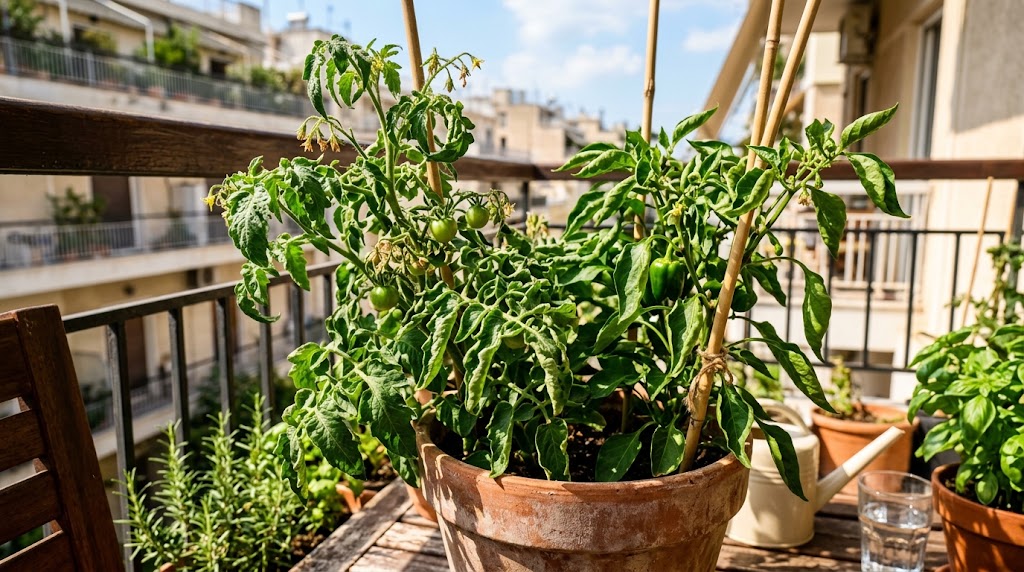
When I noticed my balcony pepper and tomato plants developing tightly cupped leaves during a hot July heatwave, I feared a viral disease had struck my patio! After adjusting my watering schedule and moving pots into partial shade, I realized that balcony plant leaves curling is often a plant’s natural defense mechanism to conserve moisture.
According to agricultural research from the University of Georgia Extension, leaf roll and physiological leaf curl in container plants frequently stem from environmental stress rather than infectious diseases.
In this guide, we will explore the 5 most common causes of balcony plant leaves curling and the exact steps to fix them today.
Quick Diagnosis: Is Your Leaf Curling Inward or Outward?
| Symptom on Plant | Likely Cause | Quick Fix |
|---|---|---|
| Leaves curling upward into a cup shape | Extreme Heat / Sun Stress | Provide afternoon shade; water deeply |
| Leaves curling downward & feel limp | Overwatering / Root Rot | Let soil dry out; check pot drainage |
| Crispy brown edges & inward curling | Underwatering / Dry Wind | Increase watering & shelter from wind |
| Distorted curling with sticky residue | Sap-Sucking Pests (Aphids) | Spray with neem oil or insecticidal soap |
| New leaves tightly twisted & stunted | Over-Fertilizing / Chemical | Flush soil with fresh water; stop fertilizer |
1. Extreme Heat and Sunlight Stress (Curling Upward)
During mid-summer, balcony environments trap intense heat between concrete floors and brick walls. When temperatures spike, plants roll their leaf edges upward into a tight cup shape to reduce surface area exposed to scorching sunlight.
If you observe balcony plant leaves curling upward during hot afternoons, your plant is attempting to prevent rapid moisture loss.
How to Fix It:
- Provide Afternoon Shade: Move sensitive containers behind balcony railings or under patio umbrellas during peak afternoon heat (between 12 PM and 4 PM).
- Deep Morning Watering: Water your containers deeply early in the morning so roots absorb moisture before heat builds up.
- Use Light Pots: Avoid dark plastic containers that absorb extreme heat.
Addressing heat stress stops balcony plant leaves curling during summer months.
2. Underwatering and Wind Burn (Crispy Edges)
Apartment balconies experience higher wind speeds than ground-level gardens. Constant breezy air combined with shallow container soil rapidly dehydrates plant foliage, leading to balcony plant leaves curling inward with dry, brown edges.
How to Fix It:
- The Finger Test: Check potting mix daily. If the top 2 inches feel dry, water deeply until water drains from the bottom holes.
- Install Wind Barriers: Group containers together near balcony walls or use mesh privacy screens to break harsh wind gusts.
- Mulch Soil: Add a 1-inch layer of straw or bark mulch to lock moisture inside container soil.
Proper hydration prevents balcony plant leaves curling due to wind exposure.
3. Overwatering and Poor Container Drainage (Curling Downward)
While underwatering causes leaves to turn crisp, overwatering leads to limp, soggy balcony plant leaves curling downward. When roots sit in waterlogged soil, they choke from lack of oxygen and cannot transport nutrients to upper foliage.
How to Fix It:
- Allow Soil Dryout: Stop watering until the top 2 inches of soil dry out completely.
- Check Drainage Holes: Ensure every pot has clear drainage holes. Raise containers onto pot feet to allow excess water to drain freely off the balcony floor.
- Repot if Necessary: If soil smells sour, repot the plant into fresh, well-draining potting mix.
Correcting drainage stops balcony plant leaves curling from root damage.
4. Sap-Sucking Pests (Aphids, Spider Mites & Thrips)
Tiny garden pests like aphids, thrips, and spider mites cluster on the undersides of young leaves, sucking out vital plant sap. This uneven sap loss causes newly developing balcony plant leaves curling into twisted, distorted shapes.
How to Fix It:
- Inspect Under Leaves: Look closely at distorted leaves for sticky residue (honeydew) or tiny insects.
- Hose Down Foliage: Spray leaves with a firm stream of water to knock off pests.
- Apply Insecticidal Soap: Spray affected plants thoroughly with organic neem oil or insecticidal soap every 5 to 7 days until pests disappear.
Eliminating sucking insects reverses balcony plant leaves curling in container gardens.
5. Over-Fertilization (Nutrient Burn & Clawing)
Giving your container plants too much synthetic fertilizer causes nitrogen burn. Excess salts build up in container soil, causing leaves to turn dark green and curl downward into a claw-like shape.
How to Fix It:
- Flush Soil: Pour generous amounts of clean water through the container to leach out excess fertilizer salts.
- Switch to Organic Fertilizer: Use balanced organic liquid seaweed or compost tea, which feed plants gently without burning roots.
- Pause Feeding: Stop applying fertilizer for 3 to 4 weeks until new growth recovers.
Balanced feeding prevents balcony plant leaves curling from fertilizer stress.
Frequently Asked Questions (FAQ)
Will curled balcony plant leaves flatten out again?
If leaf curling is caused by temporary heat stress or underwatering, leaves usually uncurl within 24 hours after watering and shade. However, leaves severely damaged by pests or fungal viruses may remain distorted and can be pruned.
Why are my balcony tomato leaves curling up?
Tomato leaves frequently curl upward during hot, dry weather to conserve water. As long as the plant stays green and healthy, physiological leaf curl in tomatoes is harmless.
Summary Checklist for Leaf Curl Recovery
- ✅ Move heat-stressed pots into partial afternoon shade.
- ✅ Water containers deeply in the morning during summer heatwaves.
- ✅ Ensure pots have bottom drainage holes and pot feet.
- ✅ Inspect undersides of curled leaves for aphids or spider mites.
- ✅ Flush soil with fresh water if over-fertilization occurs.