
Noticing tiny black flies hovering around your potted containers is one of the most frustrating parts of apartment gardening. Learning how to eliminate fungus gnats in balcony plants is essential before these annoying soil pests multiply and invade your indoor living space.
While fungus gnats do not bite humans or pets, their larvae live beneath the potting soil, feeding on organic matter and delicate feeder roots. Left untreated, a severe infestation weakens your container herbs and flowers, causing yellowing leaves and stunted plant growth.
When I first noticed small black flies buzzing near my balcony containers, I thought they were harmless fruit flies. Within two weeks, every single pot on my patio was infested! Once I understood how gnats breed in moist potting soil, I successfully eliminated fungus gnats in balcony plants using simple organic methods.
According to pest management guidelines from the University of California Agriculture Extension, controlling soil moisture and applying natural biological treatments effectively disrupts the fungus gnat life cycle without toxic chemicals.
In this guide, we will explore 5 easy, renter-friendly ways to treat fungus gnats in balcony plants so your patio stays bug-free.
Quick Comparison: Top Gnat Elimination Methods
| Control Method | Target Stage | Speed | Best For |
|---|---|---|---|
| Yellow Sticky Traps | Adult Flying Gnats | Immediate (24 Hours) | Catching flying adult gnats |
| BTI (Mosquito Bits) | Soil Larvae | Fast (3–5 Days) | Killing gnat larvae in soil |
| Soil Drying (Dryout) | Eggs & Larvae | Moderate (1 Week) | Starving gnat eggs naturally |
| Sand / Diatomaceous Earth | Emerging Adults | Moderate (1 Week) | Creating physical soil barrier |
| Neem Oil Soil Drench | Larvae & Adults | Moderate (5–7 Days) | Organic natural pest control |
1. Let the Potting Soil Dry Out Completely
Overwatering is the primary reason apartment gardeners struggle with fungus gnats in balcony plants. Female gnats lay hundreds of eggs in damp topsoil. If the top two inches of potting mix remain constantly wet, gnat eggs hatch continuously.
How to Apply:
- The Dryout Technique: Stop watering your balcony pots until the top 2 to 3 inches of potting soil feel completely dry to the touch.
- Starve the Eggs: Gnat eggs and young larvae cannot survive in dry soil. Allowing pots to dry out breaks the breeding cycle naturally.
- Elevate Pots: Ensure containers have clear bottom drainage holes so water never pools in saucer trays.
Controlling moisture is the first crucial step to eliminate fungus gnats in balcony plants for good.
2. Use Yellow Sticky Traps for Adult Gnats
While treating the soil handles larvae, you must trap adult flying gnats to stop them from laying fresh eggs in neighboring containers.
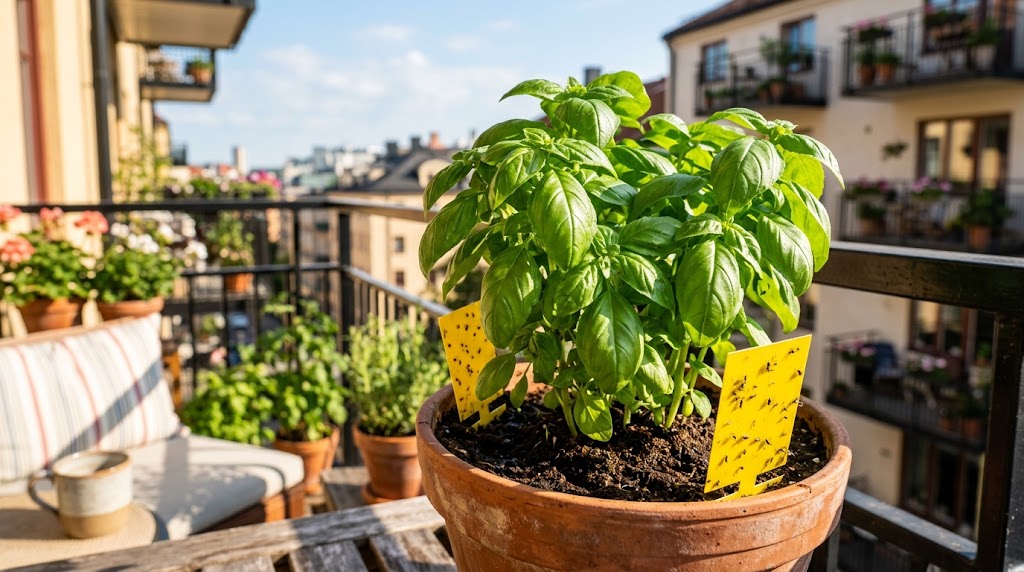
Fungus gnats are naturally attracted to bright yellow colors. Placing yellow sticky cards directly in your pots catches flying adults instantly.
How to Apply:
- Placement: Insert small yellow sticky stakes into the potting soil near the base of your infected balcony containers.
- Coverage: Place one sticky trap per container for maximum control.
- Replacement: Replace sticky cards once they fill up with trapped insects or lose stickiness due to outdoor dust.
Catching flying adults prevents fresh eggs from worsening fungus gnats in balcony plants.
3. Apply BTI (Bacillus thuringiensis israelensis)
To kill gnat larvae hidden beneath the soil surface, BTI is the safest, most effective organic remedy available for apartment gardeners.
BTI is a naturally occurring soil bacterium that specifically targets gnat and mosquito larvae while remaining 100% safe for humans, pets, and beneficial garden insects.
How to Apply:
- Soak Mosquito Bits: Steep 2 tablespoons of BTI granules (commonly sold as Mosquito Bits) in a gallon of warm water for 30 minutes.
- Water Soil: Strain out the granules and use the BTI-infused water to water your balcony pots thoroughly.
- Repeat: Apply BTI water every 7 days for three consecutive weeks to destroy emerging larvae generations.
Using BTI is a proven biological solution when fighting fungus gnats in balcony plants.
4. Topdress Pots with Sand or Diatomaceous Earth
Female gnats prefer laying eggs in soft, rich organic potting soil. Adding a physical barrier on top of your potting mix prevents adult gnats from reaching the moist soil below.
How to Apply:
- Coarse Sand Layer: Spread a 1/2-inch layer of clean horticultural sand over the top of your container soil. Sand dries out rapidly, making it impossible for adult gnats to lay eggs.
- Diatomaceous Earth (DE): Alternatively, dust food-grade Diatomaceous Earth over dry topsoil. DE contains microscopic sharp edges that dissolve gnat exoskeletons on contact.
Adding a protective top layer stops adult fungus gnats in balcony plants from laying fresh eggs.
5. Drench Soil with Organic Neem Oil
Neem oil contains azadirachtin, a natural compound that disrupts insect growth and stops gnat larvae from feeding on plant roots beneath the soil.
How to Apply:
- Mix Solution: Combine 1 tablespoon of organic cold-pressed neem oil with 1/2 teaspoon of mild liquid dish soap in 1 quart of warm water.
- Drench Soil: Pour the mixture directly onto the potting soil until it drains from the bottom holes.
- Foliage Spray: Lightly spray plant stems and lower leaves to deter resting adult gnats.
Using neem oil offers a chemical-free way to eradicate fungus gnats in balcony plants.
Frequently Asked Questions (FAQ)
Can fungus gnats travel indoors from balcony plants?
Yes! Fungus gnats easily fly through open balcony doors and window screens into indoor houseplants. Treating outdoor balcony containers promptly prevents indoor houseplant infestations.
Does hydrogen peroxide kill fungus gnat larvae?
Yes. Mixing 1 part 3% hydrogen peroxide with 4 parts water and pouring it into potting soil fizzes on contact, killing gnat larvae immediately without harming plant roots.
Summary Checklist for Gnat Control
- ✅ Allow top 2 inches of potting soil to dry out between waterings.
- ✅ Insert yellow sticky traps in pots to catch flying adult gnats.
- ✅ Water pots with BTI-infused water (Mosquito Bits) weekly to kill larvae.
- ✅ Add a 1/2-inch sand barrier over topsoil to block egg laying.
- ✅ Enjoy bug-free, healthy balcony plants all summer long!