

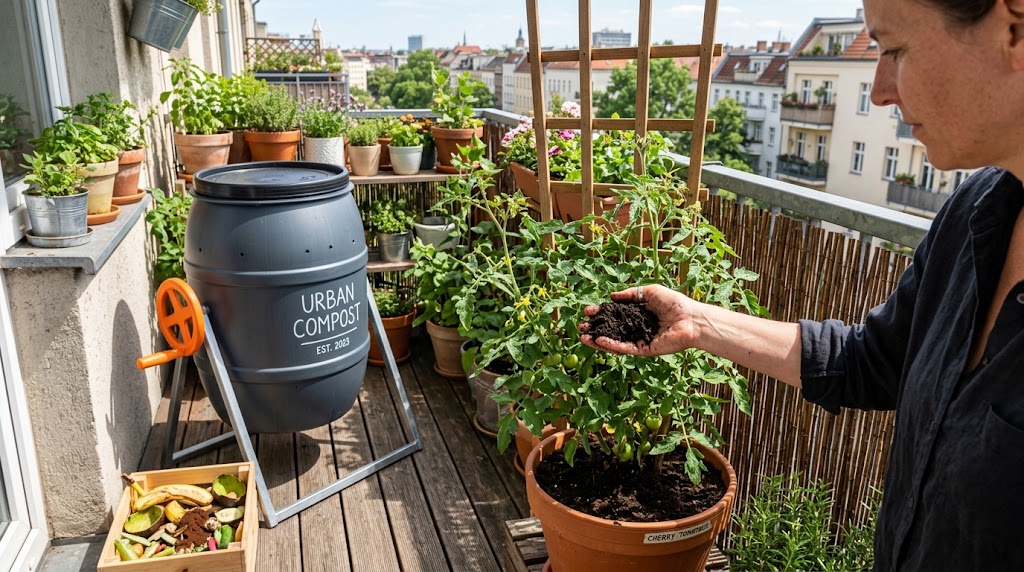
If you want to turn everyday kitchen scraps into rich organic soil food, building a balcony compost bin for small apartments is an easy, odor-free solution.
When I first started balcony gardening, I hated throwing away fruit peels, coffee grounds, and vegetable scraps into the trash. Buying bags of commercial potting soil and synthetic fertilizers gets expensive quickly. I wanted a continuous supply of rich organic compost, but I was terrified that a compost bin on my small apartment balcony would smell terrible, attract flies, or annoy my neighbors.
Fortunately, small-space composting has come a long way. With the right aeration, moisture balance, and container setup, apartment composting produces zero foul odors and converts kitchen waste into “black gold” in just a few short weeks.
According to waste reduction guidelines from Cornell University Waste Management Extension, balanced home composting breaks down organic material aerobically, eliminating offensive odors while preserving up to 90 percent of vital plant nutrients like nitrogen and potassium.
Here is your complete step-by-step guide to building a clean balcony compost bin for small apartments.
Why Building a Balcony Compost Bin for Small Apartments Works
Composting on a small patio reduces kitchen waste while providing continuous free nutrition for your potted vegetables and herbs.
Operating a balcony compost bin for small apartments improves soil water retention, feeds beneficial soil microbes, and saves money on store-bought soil amendments.

Step-by-Step Guide to Build a Balcony Compost Bin for Small Apartments
Building your own balcony composter takes less than 30 minutes using simple DIY materials.
Step 1: Select a 5-Gallon Bucket or Plastic Storage Tote
Choose a sturdy 5-gallon plastic bucket or a 10-gallon plastic tote with a tight-fitting lid. Dark-colored plastic helps absorb solar heat, which speeds up microbial decomposition.
Step 2: Drill Ventilation Holes for Aeration
Compost needs oxygen to decompose cleanly without smells. Drill 1/4-inch holes every 3 inches along the sides, lid, and bottom of your plastic bin. Cover bottom holes with fine wire mesh or window screening to prevent soil leakage.
Step 3: Add a Catch Tray for Drainage
Place your drilled composter inside a shallow plastic saucer or tray. Any excess liquid (compost tea) that drains out can be diluted with water and fed directly to your container crops.
Step 4: Layer “Browns” and “Greens”
A successful balcony compost bin for small apartments relies on a balanced 3:1 ratio of carbon-rich “browns” to nitrogen-rich “greens.”
- Browns (Carbon): Shredded cardboard, dry leaves, coconut coir, and paper egg cartons.
- Greens (Nitrogen): Vegetable peels, fruit scraps, coffee grounds, and tea bags.
Start with a 3-inch layer of dry browns at the bottom, add a layer of green kitchen scraps, and always cover fresh food scraps with a top layer of dry browns.
How to Prevent Odors in Your Balcony Compost Bin for Small Apartments
To keep your apartment composter 100% odor-free, follow these essential maintenance rules:
1. Always Bury Fresh Food Scraps
Exposed food scraps attract fruit flies and release odors. Whenever you add kitchen waste, bury it deep under a 2-inch cap of shredded cardboard or dry coco coir.
2. Maintain Proper Moisture Balance
Compost should feel like a wrung-out damp sponge. If your bin gets too wet, add extra dry cardboard. If it feels dusty dry, mist it lightly with water.
3. Rotate or Mix Weekly
Use a small hand trowel to turn your compost once a week. Aerating the pile prevents stagnant anaerobic pockets from forming.
Composting research from the University of California Agriculture and Natural Resources (UC ANR) confirms that maintaining proper oxygenation through weekly turning prevents foul-smelling anaerobic bacteria from colonizing container compost.
For more natural soil food ideas, check out our guide on 10 Best DIY Fertilizer Ideas for Balcony Plants.
What to Put in Your Apartment Compost Bin
| Safe to Compost ✅ | Never Compost ❌ |
|---|---|
| Fruit & vegetable scraps | Meat, bones, or fish scraps |
| Coffee grounds & paper filters | Dairy products or oils |
| Crushed eggshells | Pet waste or cat litter |
| Shredded cardboard & paper | Diseased plant leaves |
| Dry leaves & coconut coir | Plastic or glossy coated paper |
Combining homemade compost with moisture-holding amendments helps Prevent Container Soil Drying Out Fast during hot summer months.
To keep pests away from your patio, explore our natural tips in 10 Best Organic Pest Control Methods for Balcony Plants.
Recommended Related Reading 📚
To expand your eco-friendly apartment garden, explore these related guides on our website:
- 🧪 10 Best DIY Fertilizer Ideas for Balcony Plants – Homemade organic plant food recipes.
- 💧 How to Prevent Container Soil Drying Out Fast – Master soil moisture retention.
- 🐛 10 Best Organic Pest Control Methods for Balcony Plants – Keep pests away from your patio naturally.
Frequently Asked Questions
How long does it take to get finished compost in a balcony bin?
In warm spring and summer weather, a small balcony bin turns kitchen scraps into dark, earth-smelling finished compost in 4 to 8 weeks.
Can I use Bokashi composting on an apartment balcony?
Yes! Bokashi is an anaerobic fermentation system that works exceptionally well in small apartments. Food scraps ferment in a sealed bucket before being mixed into balcony container soil.
Final Thoughts
Building your own organic soil food is one of the most satisfying DIY projects for urban gardeners. By using a drilled plastic tote, maintaining a 3:1 brown-to-green ratio, and mixing weekly, you can operate a clean, odor-free balcony compost bin for small apartments.
Have you tried composting on your apartment patio? Share your tips in the comments below!