

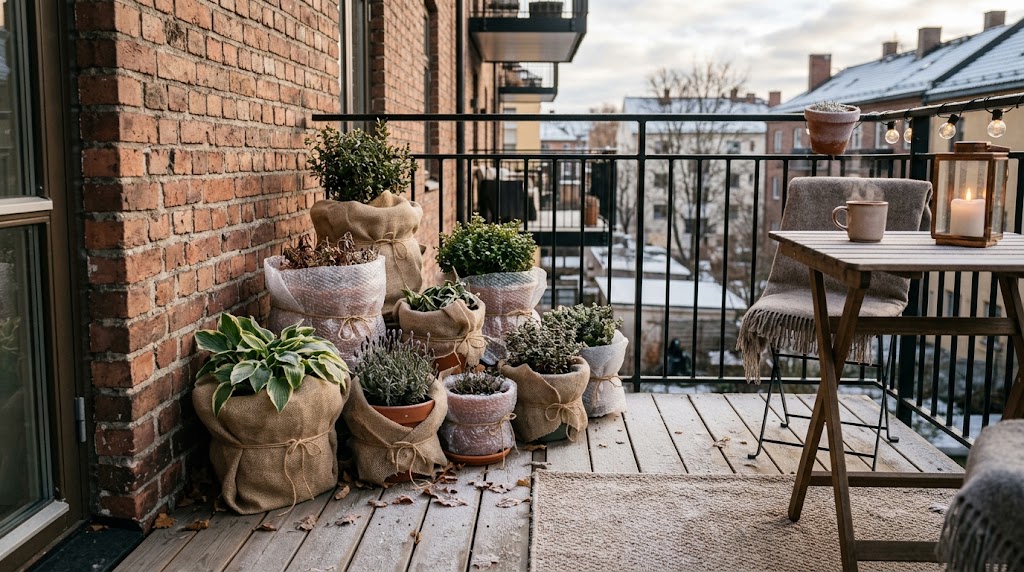
If you want to protect your potted perennials from freezing temperatures and icy winds, learning how to winterize apartment balcony garden containers is essential.
When my first winter as a balcony gardener approached, I assumed my hardy potted herbs and potted perennials would survive the cold on their own. After all, they were rated for my plant hardiness zone. Unfortunately, I woke up in January to find cracked ceramic pots and frozen plant roots.
I quickly learned that container roots lack the insulating protection of ground soil. In a garden bed, surrounding earth keeps root zones at a stable temperature. On an exposed high-rise balcony, cold air surrounds all sides of a pot, causing soil to freeze solid and thaw repeatedly—a process that destroys plant root cells and shatters terracotta pots.
According to winter care guidelines from the University of Wisconsin-Madison Extension, potted plant roots are typically 2 hardiness zones less cold-hardy than the exact same plants growing in the ground.
Here is your step-by-step guide on how to successfully winterize apartment balcony garden spaces before the first hard freeze hits.
Why You Must Winterize Apartment Balcony Garden Pots
Winter brings two major threats to balcony containers: root freezing and wind dehydration. Cold winter winds strip moisture from foliage quickly, while frozen soil prevents roots from drinking water.
Taking time to winterize apartment balcony garden planters insulates delicate root systems, preserves expensive containers from cracking, and ensures your perennials bounce back lush and green come spring.

7 Easy Steps to Winterize Apartment Balcony Garden Spaces
Follow these 7 practical steps to protect your balcony garden through cold winter months.
Step 1: Move Tropical Plants Indoors Early
Tropical houseplants, tender herbs (like sweet basil), and warm-weather perennials cannot survive temperatures below 50°F (10°C). Bring tender plants indoors before your area’s first autumn frost date. Inspect leaf undersides for bugs before moving pots inside.
Step 2: Group Containers Against Interior Walls
The exterior walls of your apartment building radiate trapped indoor warmth. Move all potted plants away from outer balcony railings and group them tightly against your home’s warmest interior brick or concrete wall.
Step 3: Insulate Pot Walls with Burlap & Bubble Wrap
Insulation is the core secret when you winterize apartment balcony garden containers. Wrap individual pots in layers of bubble wrap, burlap, or heavy frost cloth, securing the wrapping with twine. This creates a thermal barrier that prevents rapid freeze-thaw cycles.
Step 4: Elevate Pots Off Cold Floor Concrete
Concrete balcony floors absorb freezing temperatures and transfer cold directly into container bottoms. Place wooden pot feet, cedar slats, or thick foam boards beneath your containers to elevate them off bare balcony flooring.
Step 5: Add a Thick Layer of Protective Surface Mulch
Apply a 2-inch to 3-inch layer of dry straw, shredded bark, or evergreen boughs over the topsoil of every winterized container. Surface mulch acts as a warm blanket, preserving soil moisture and insulating root crowns. To master moisture management year-round, read our guide on how to Prevent Container Soil Drying Out Fast.
Step 6: Protect Pots from Cold Winter Winds
Breezy balcony winds cause severe winter desiccation. Position heavy planters behind solid privacy screens or wind barriers. If your patio faces high gusts, consider pairing your collection with cold-hardy varieties from our guide on 10 Best Wind Tolerant Balcony Plants for High-Rise Patios.
Step 7: Water Thoroughly Before the Ground Freezes
Drying out is actually a more common cause of winter plant death than cold temperatures! Water your potted perennials deeply right before the ground freezes solid. Moist soil retains heat much better than bone-dry potting mix.
How to Protect Pots When You Winterize Apartment Balcony Garden Containers
Different pot materials handle freezing weather differently. Protect your investment by following these material rules:
- Unglazed Terracotta & Ceramic: Empty these pots completely and store them indoors. Moisture trapped in clay pores expands when frozen, cracking the pot.
- Resin, Plastic & Fiberglass: Highly durable and frost-resistant. These containers can safely remain outside all winter long.
- Fabric Smart Pots: Fabric pots handle freezing temperatures well without cracking, though soil will dry out faster in winter winds.
Research from Penn State Extension recommends placing smaller ceramic pots inside larger plastic tubs filled with wood shavings or straw—a technique called “double-potting”—to maximize thermal root protection.
If you prefer low-effort plants that survive winter easily, explore our recommendations for 10 Best Low Maintenance Balcony Plants.
Recommended Related Reading 📚
To keep your apartment garden protected across every season, check out these guides on our website:
- 💨 10 Best Wind Tolerant Balcony Plants for High-Rise Patios – Cold and wind-resistant plant picks.
- 💧 How to Prevent Container Soil Drying Out Fast – Master container soil moisture retention.
- 🌿 10 Best Low Maintenance Balcony Plants for Beginners – Durable plants for stress-free gardening.
Frequently Asked Questions
Do balcony plants need watering during winter?
Yes! On warm winter days when soil thaws, check your potted perennials. If topsoil feels dry, water lightly in the morning so excess moisture drains before freezing night temperatures arrive.
Can I leave potted perennial herbs on my balcony all winter?
Cold-hardy perennial herbs like thyme, sage, and chives can survive outdoors if their pots are insulated with burlap and grouped against building walls. Tender herbs like basil and rosemary must be brought indoors.
Final Thoughts
Preparing your apartment patio for freezing weather takes less than an hour, but it saves your favorite plants and expensive containers. By grouping pots, wrapping insulation, and elevating containers, you can easily winterize apartment balcony garden spaces for a lush spring return.
How do you protect your balcony plants during cold weather? Share your winter tips in the comments below!