

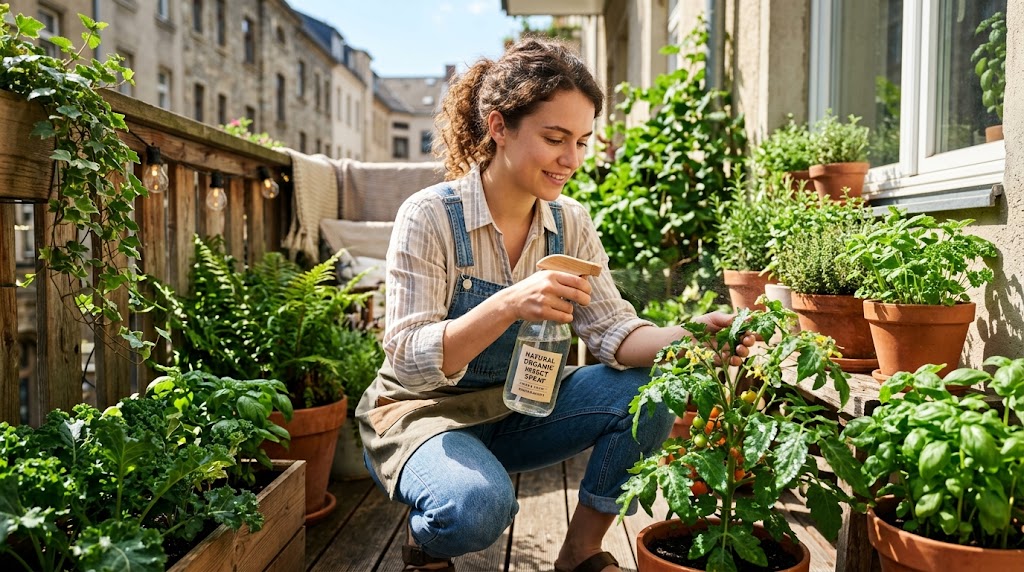
If you are looking for safe, effective organic pest control for balcony plants, you have come to the right place.
When bugs hit a balcony garden, they multiply quickly. Because potted containers sit close together on small apartment patios, a minor colony of aphids or spider mites on one pot can spread to your entire balcony in just a few days.
Early in my balcony gardening journey, I made the mistake of ignoring a few tiny white dots under my potted mint leaves. Within a week, my herbs, container tomatoes, and sweet basil were covered in pests. Since my balcony sits right off my living room sliding door, I refused to spray synthetic chemical insecticides that could harm my cat or drift into my home. That is when I decided to master organic pest control for balcony plants.
According to Integrated Pest Management research from the University of California Agriculture and Natural Resources (UC ANR), natural non-chemical controls effectively manage over 90 percent of common container garden pests while protecting beneficial insects and human health.
Why Organic Pest Control for Balcony Plants is Essential
Using synthetic pesticides on small apartment balconies poses serious risks. Chemical fumes linger in enclosed outdoor areas and easily blow through open windows into your apartment.
Adopting smart methods of organic pest control for balcony plants keeps your living environment clean while building resilient potted plants. Natural sprays break down quickly in sunlight, leaving zero toxic residue on your home-grown container crops.

10 Best Methods for Organic Pest Control for Balcony Plants
Here are 10 proven strategies to practice organic pest control for balcony plants using simple household ingredients and safe gardening practices.
1. Organic Neem Oil Spray
Neem oil is derived from neem tree seeds and stands as one of the best multi-purpose remedies for organic pest control for balcony plants. It contains azadirachtin, a natural compound that disrupts insect feeding and hormone balance. It works exceptionally well against soft-bodied pests like aphids, thrips, spider mites, and whiteflies.
- How to Mix: Mix 1 teaspoon of cold-pressed neem oil into 1 quart of warm water with 1/2 teaspoon of liquid Castile soap.
- Application: Shake well and spray both the tops and undersides of leaves in the late evening.
Alex’s Tip: Never spray neem oil during peak afternoon sunlight. Sunlight can scorch oil-coated leaves. Always apply near sunset when temperatures cool down.
2. Insecticidal Castile Soap Solution
Pure Castile soap (like Dr. Bronner’s) creates a fast-acting spray for organic pest control for balcony plants. The natural fatty acids in vegetable-based soap dissolve the protective waxy coating of soft-bodied insects, causing them to dehydrate quickly.
- How to Mix: Combine 1 tablespoon of liquid Castile soap with 1 quart of warm water.
- Application: Spray directly onto visible pest clusters. Soap only kills insects on contact.
3. Strong Water Jet Blast
Sometimes the simplest approach to organic pest control for balcony plants is a firm stream of plain water. Taking your pots to the sink or using a hose nozzle knocks aphids, spider mites, and webs right off your plant foliage. Most soft-bodied bugs knocked loose cannot climb back up to re-attach.
4. Yellow Sticky Cards for Flying Insects
If tiny black flies are fluttering around your container soil, you are likely dealing with fungus gnats. If you suspect gnats, check out our guide on How to Get Rid of Fungus Gnats in Balcony Plants.
Bright yellow sticky stakes provide continuous organic pest control for balcony plants by trapping adult gnats, leafminers, and whiteflies before they lay eggs in your soil.
5. Diatomaceous Earth (DE) Soil Dusting
Food-grade Diatomaceous Earth (DE) is a natural powder made from fossilized microscopic algae. To crawling pests, DE acts like sharp glass that pierces exoskeletons, offering clean, chemical-free organic pest control for balcony plants.
Dust a light layer over dry topsoil to stop ants, crawling larvae, and soil pests. Reapply after heavy rain once soil surfaces dry out.
DIY Recipes for Organic Pest Control for Balcony Plants
6. Companion Planting with Pest-Repellent Herbs
You can build natural defenses by growing pest-repellent herbs right next to potted crops. Strongly scented companion herbs mask the smell of host plants, providing passive organic pest control for balcony plants.
- Marigolds: Deter nematodes, aphids, and whiteflies.
- Basil & Mint: Repel mosquitoes, thrips, and flies.
- Rosemary & Thyme: Discourage cabbage moths and leafhoppers.
Pairing pest-repellent herbs with tough, low-maintenance balcony plants keeps your patio lush and pest-free.
7. Rubbing Alcohol Spot Treatment
For scale insects or mealybugs tucked into leaf joints, a localized spot treatment works wonders for organic pest control for balcony plants. Dip a cotton swab in 70% isopropyl alcohol and dab bugs directly to dissolve their protective wax coating instantly.
8. Homemade Garlic and Chili Pepper Spray
Spicy chili peppers and garlic contain capsaicin and sulfur compounds that create an effective repellent. Research from the Oregon State University Extension Service confirms capsaicin-based sprays act as a strong natural deterrent for garden insects.
Blend 2 garlic bulbs and 2 hot peppers with water, strain through cheesecloth, add 1/2 teaspoon of Castile soap, and spray weekly for natural organic pest control for balcony plants.
9. Regular Pruning of Damaged Foliage
Dense foliage creates a shaded, humid environment where pests thrive. Regularly trimming yellowing leaves is a great preventative step for organic pest control for balcony plants. If you notice foliage discoloration, read our guide on Why Are My Balcony Tomato Leaves Turning Yellow.
10. Releasing Beneficial Insects
Even on a high-rise balcony, releasing beneficial insects like ladybugs or lacewing larvae provides biological organic pest control for balcony plants. A single ladybug can eat up to 50 aphids a day!
Quick Reference Guide
| Target Bug | Recommended Method | Frequency |
|---|---|---|
| Aphids & Whiteflies | Neem Oil or Castile Soap | Every 5–7 days |
| Spider Mites | Water Spray + Neem Spray | Every 3 days |
| Fungus Gnats | Yellow Sticky Cards + DE Dust | Continuous |
| Mealybugs & Scale | Rubbing Alcohol Cotton Swab | Spot-treat directly |
| Caterpillars & Beetles | Garlic-Chili Pepper Spray | Weekly |
Frequently Asked Questions About Organic Pest Control for Balcony Plants
Is neem oil safe for edible balcony herbs and vegetables?
Yes! Cold-pressed organic neem oil is safe for edible crops when used correctly for organic pest control for balcony plants. Always wash harvested herbs and vegetables before eating.
How often should I apply organic pest control for balcony plants?
For active bug infestations, apply organic sprays every 3 to 5 days for two weeks to break the egg hatching cycle. For routine prevention, spray once every two weeks.
Will soap sprays harm beneficial ladybugs and bees?
Directly spraying soap onto any insect can harm it. Apply sprays in the late evening when bees and ladybugs are inactive so the leaves dry overnight.
Final Thoughts
Keeping container garden bugs away does not require synthetic chemicals. By keeping neem oil, Castile soap, and sticky cards handy, you can easily maintain safe, effective organic pest control for balcony plants.
Try picking two or three methods today to keep your apartment balcony garden thriving and pest-free!
What is your favorite natural pest remedy? Share your tips in the comments below!